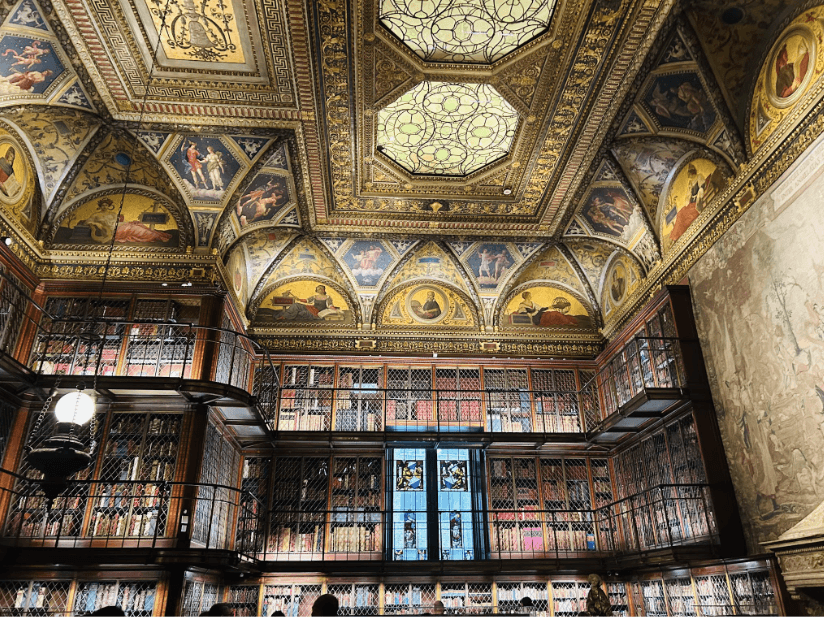
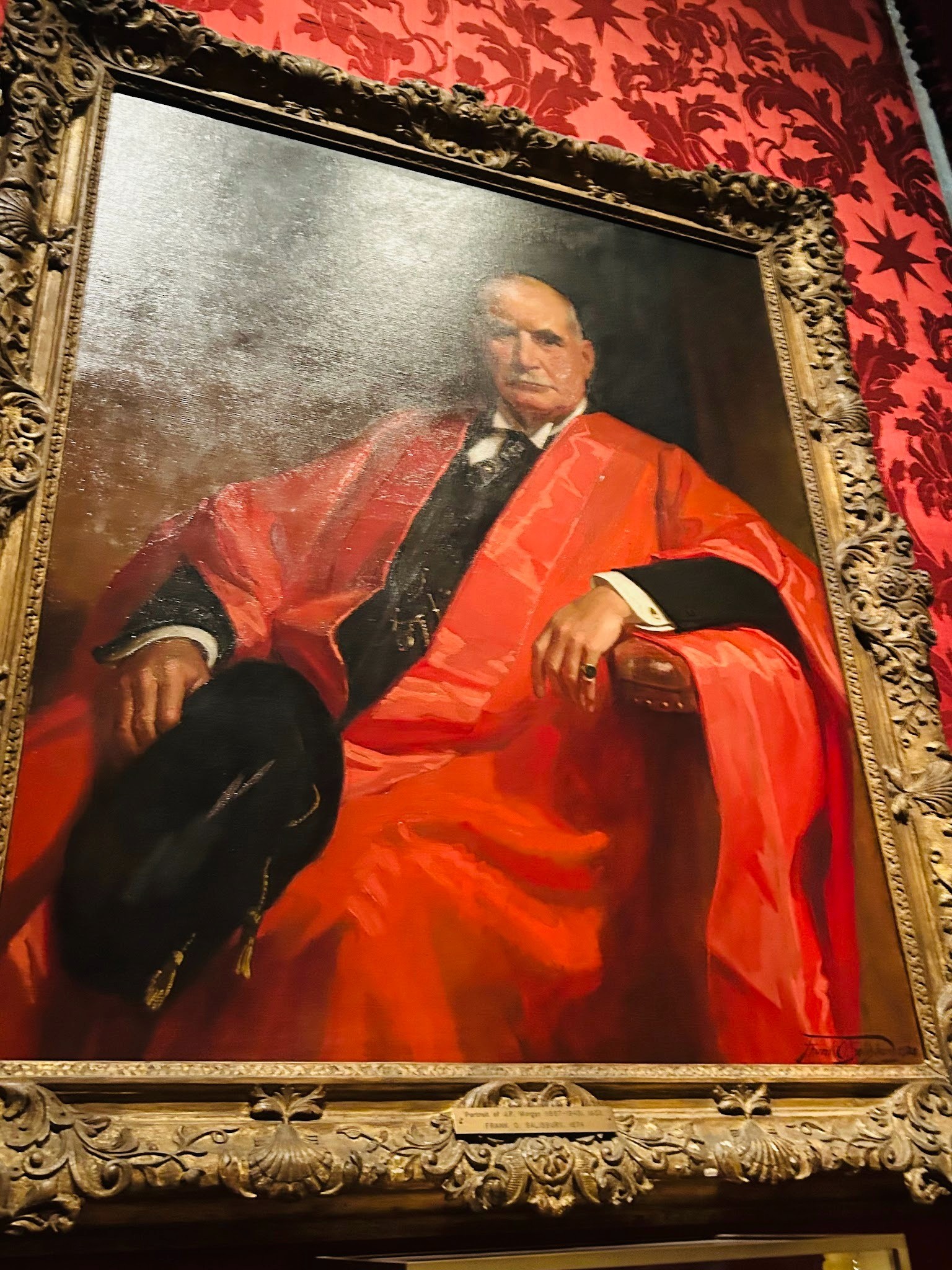
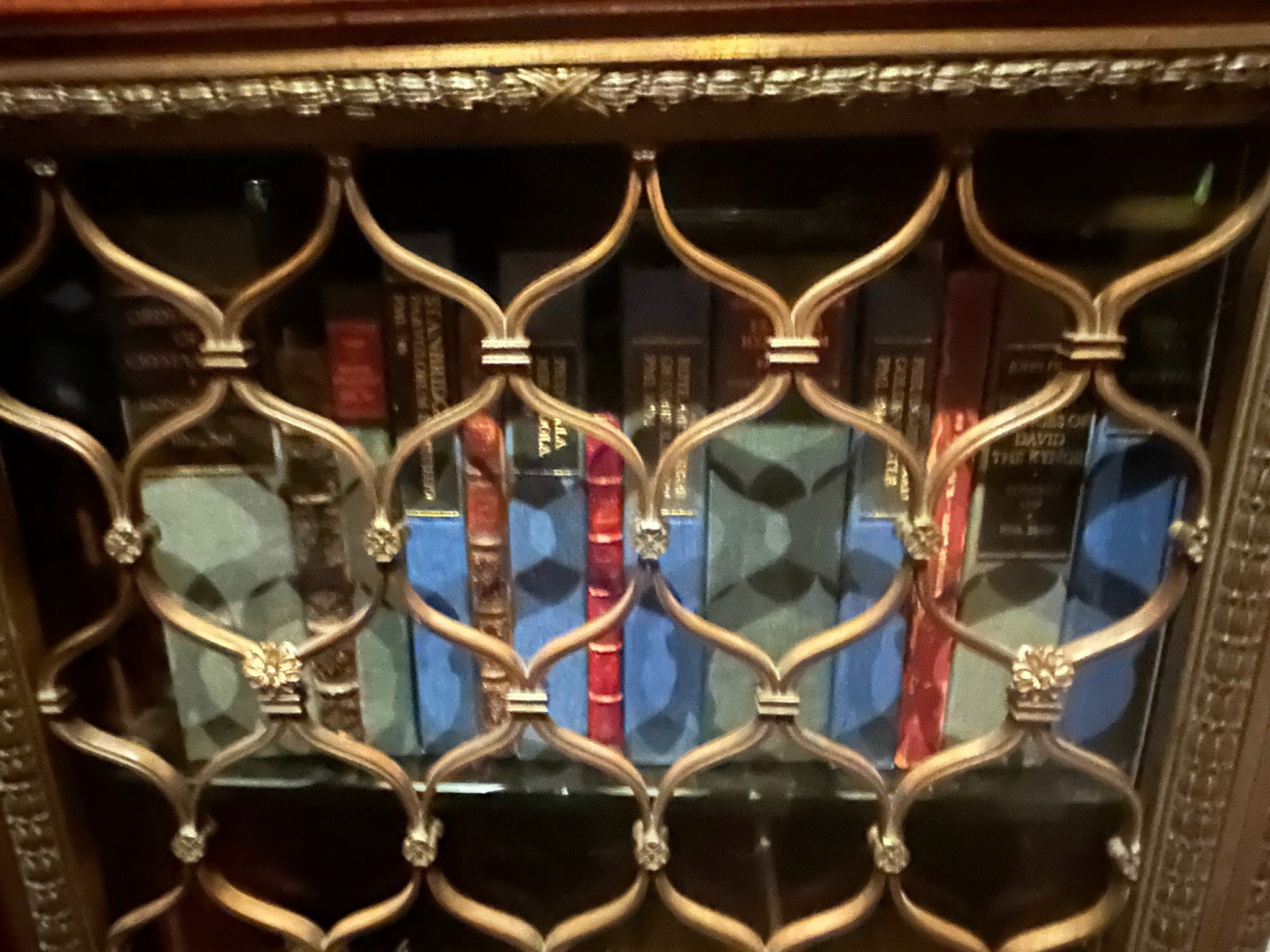
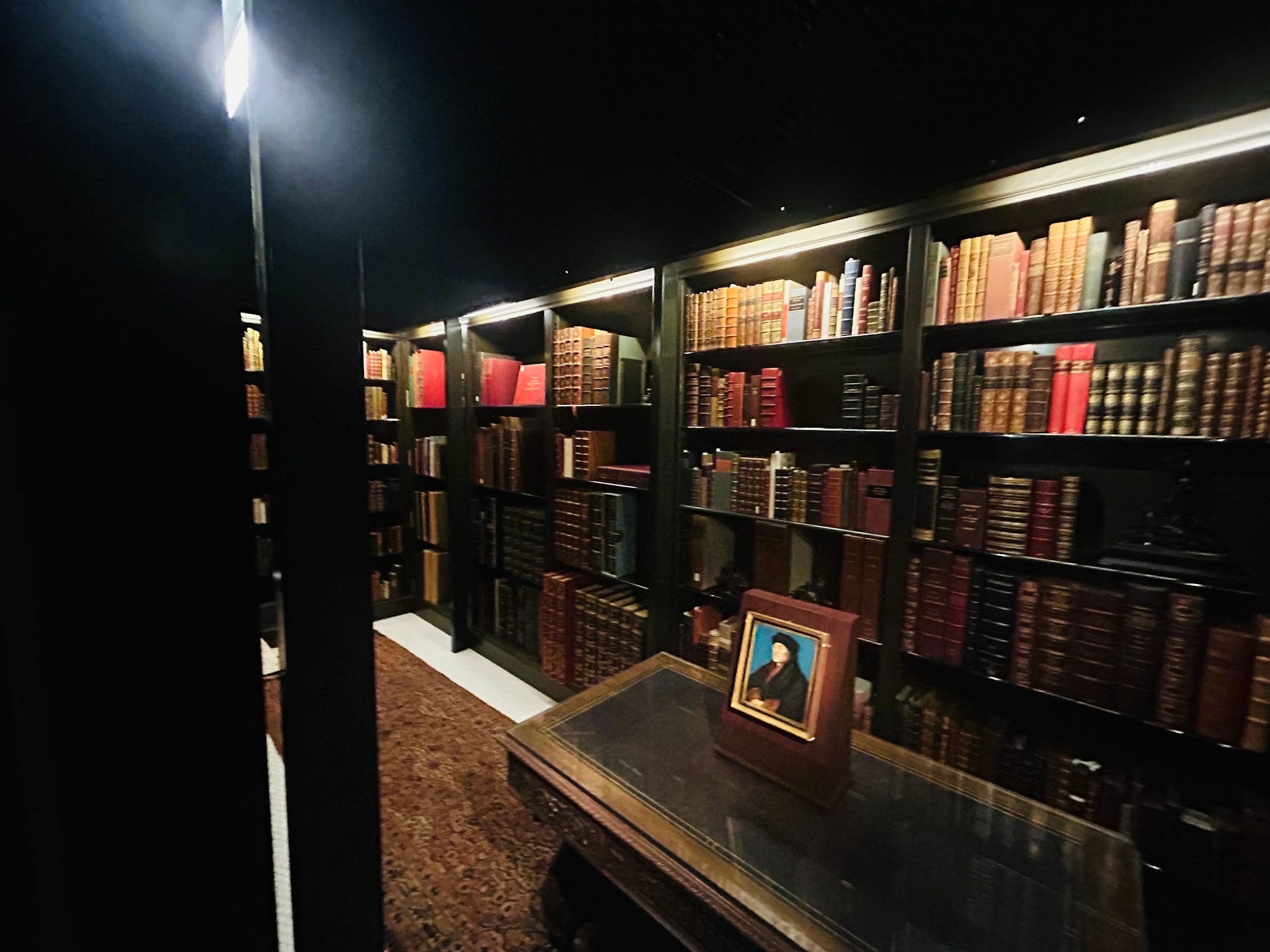
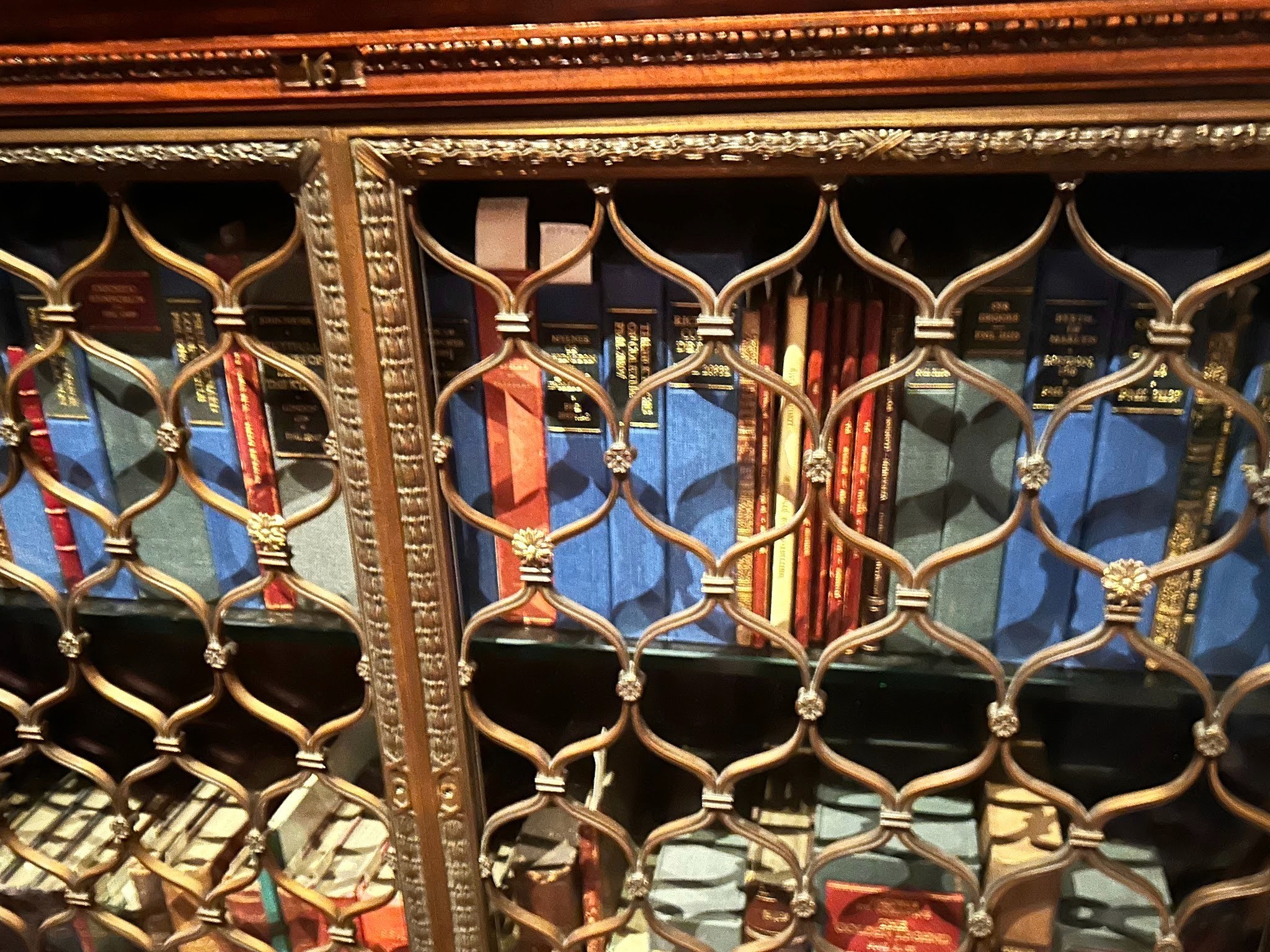
The thing about when you first walk into the Morgan Library is that your gaze is immediately pulled upwards, to the three-tiered shelves filled with rare books locked behind iron lattice, while in the adjacent room down the open hall appears to be J.P. Morgan himself’s old study, where a portrait of himself hangs, posed in red robes like a cardinal who happened to also control the American economy.
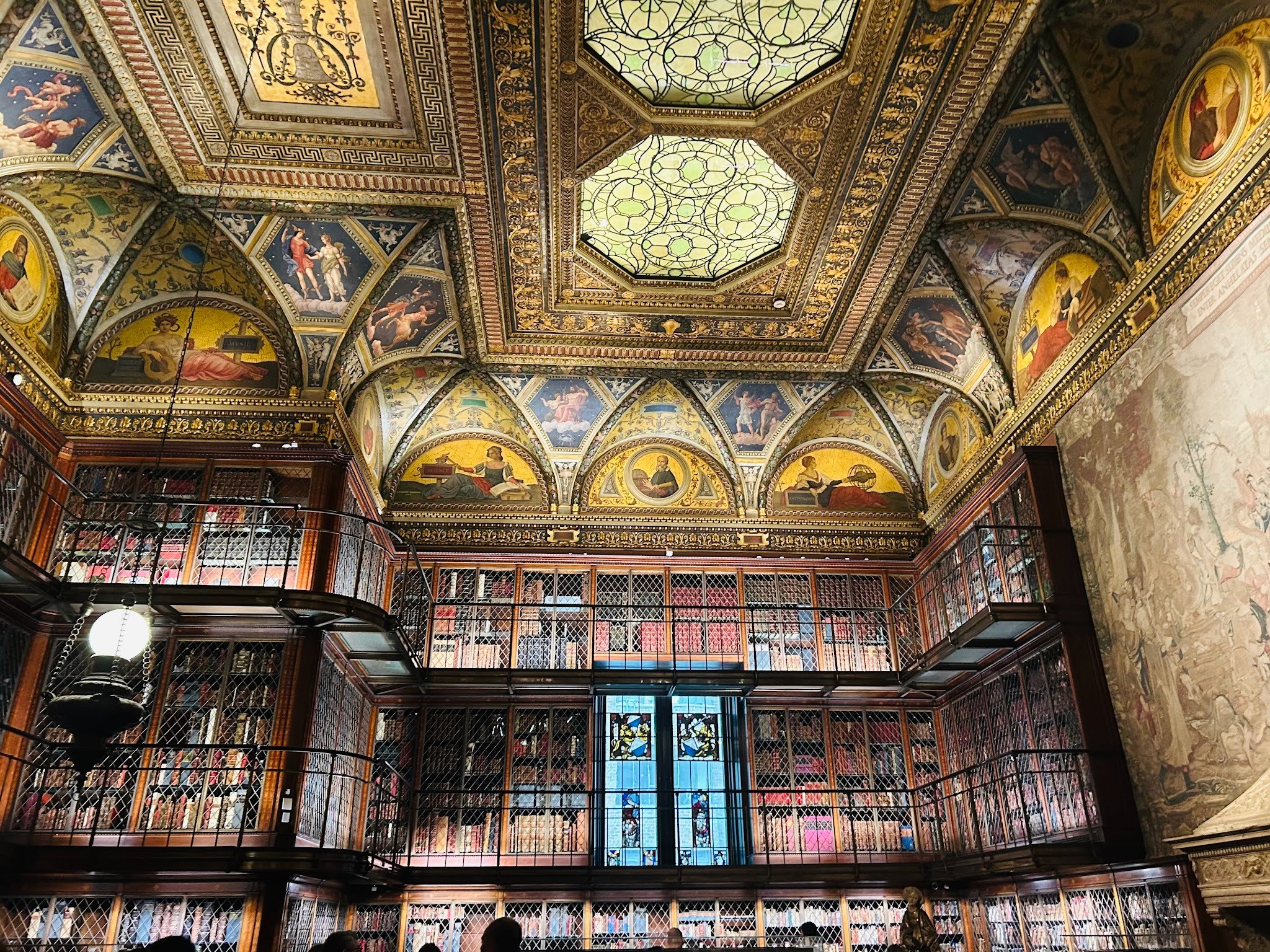
It takes a moment to calibrate and understand the placement of the signs on the ceiling, but eventually, I make sense of it, pointing out which images represent which horoscope, which is always fun. As it reminded me of the Dendera Zodiac , the first representation of the horoscope from Ancient Egypt during the Ptolemaic period, now located in the Louvre.
But I digress, there in J.P. Morgan’s prized library, filled with books I wish I could slowly comb through, lies the vivid and expressive horizon that spans the vault above Morgan's once private library. The man who financed railroads, bailed out the U.S. government twice, and restructured entire industries also happened to consult the stars, which I will always find curious.
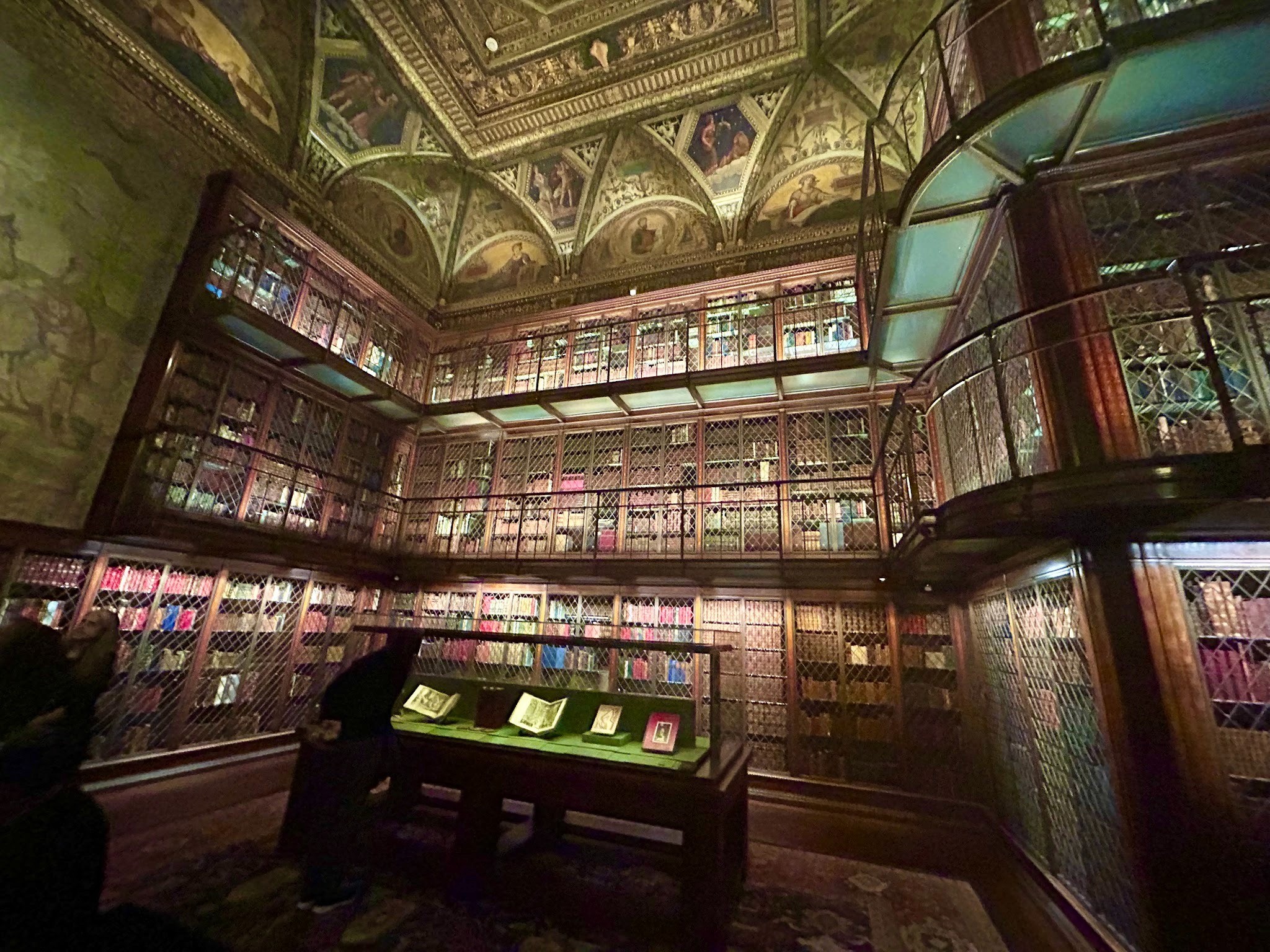
The room felt regal the moment I stepped into it, as though time had been preserved in a way that most spaces can’t even imagine. But it was really the books that were the showstopper, entire collections locked behind glass. There was so much to see that I imagine one could spend an entire lifetime in the library going through each of those individual books.
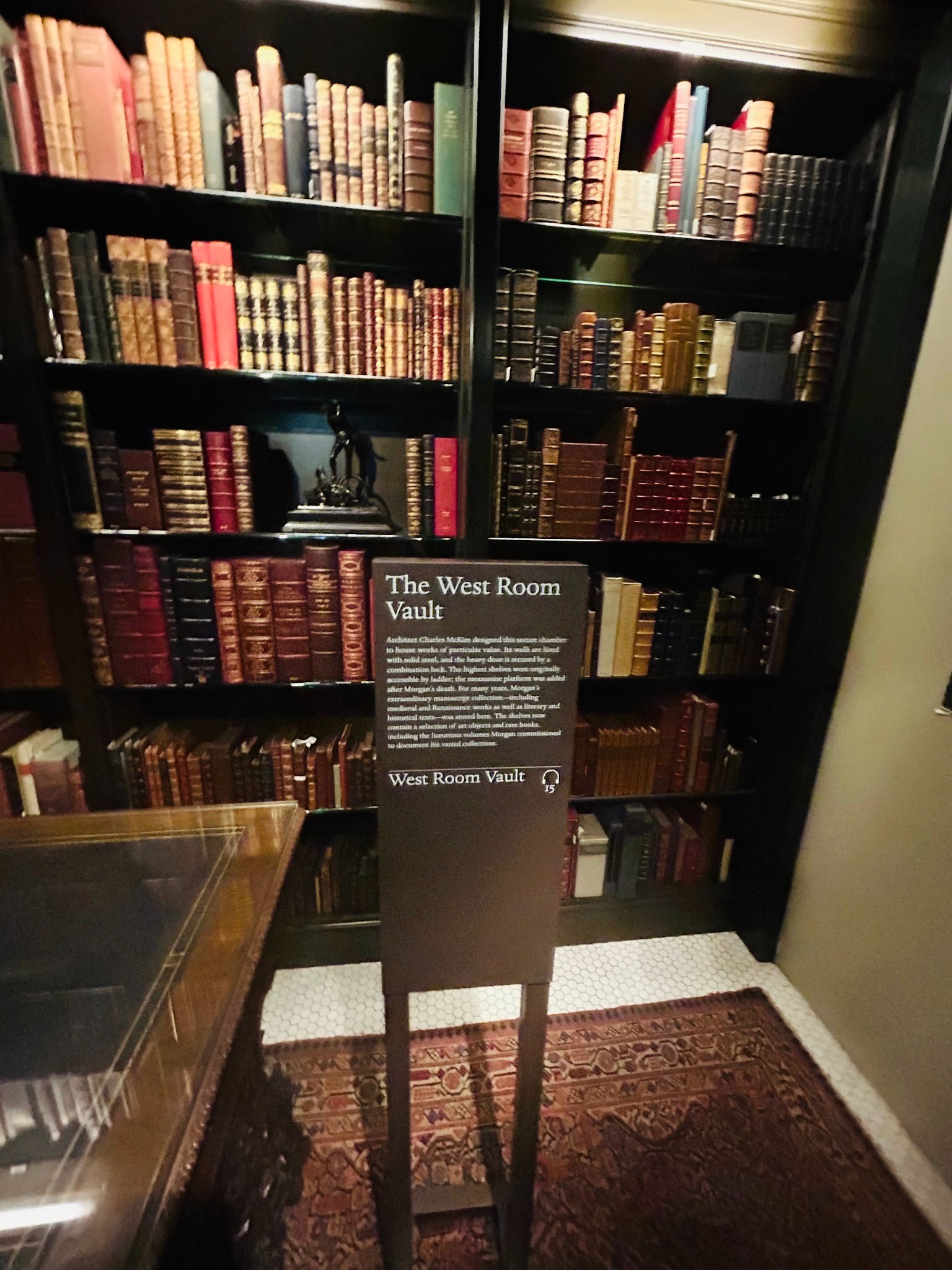
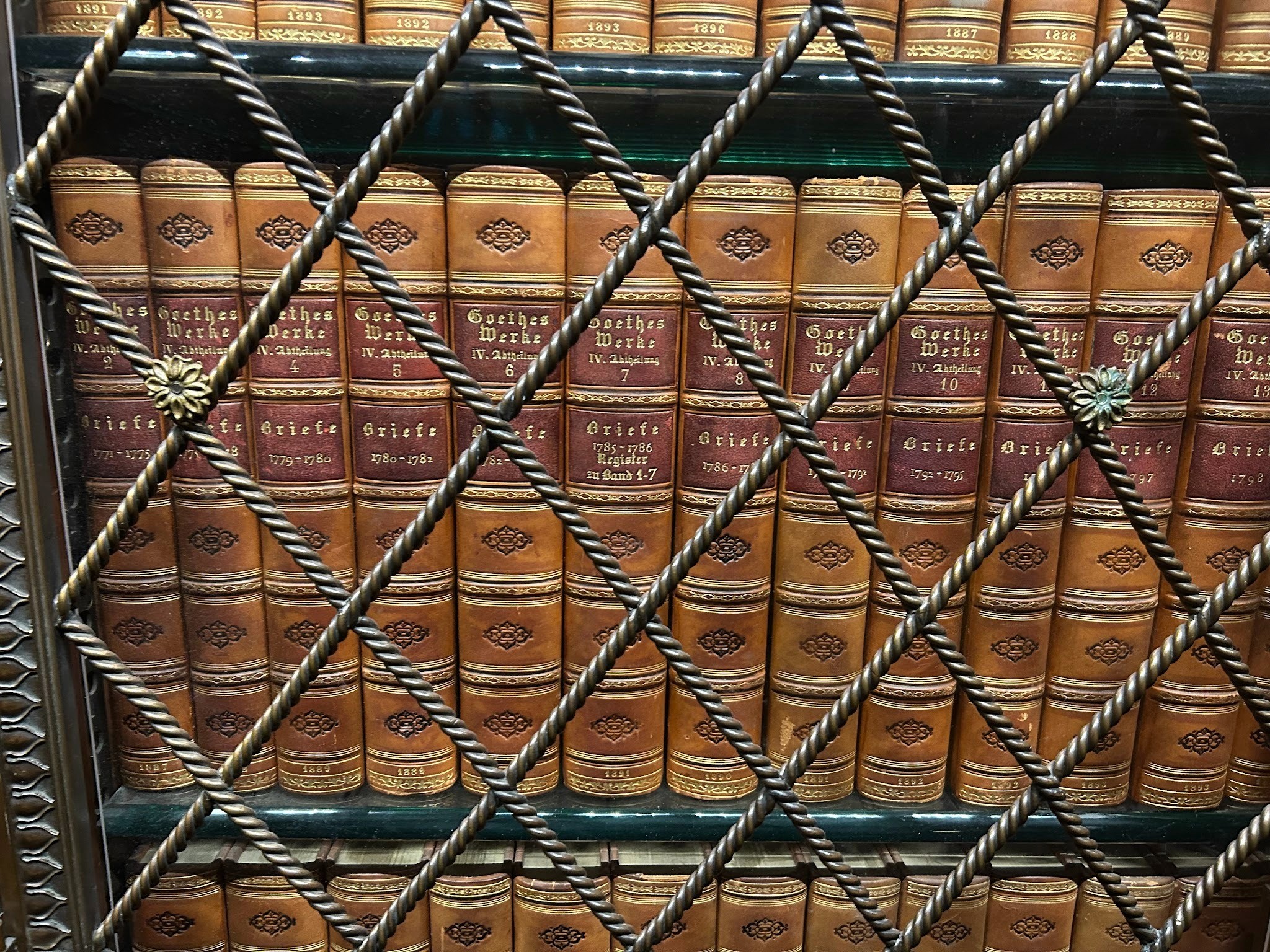
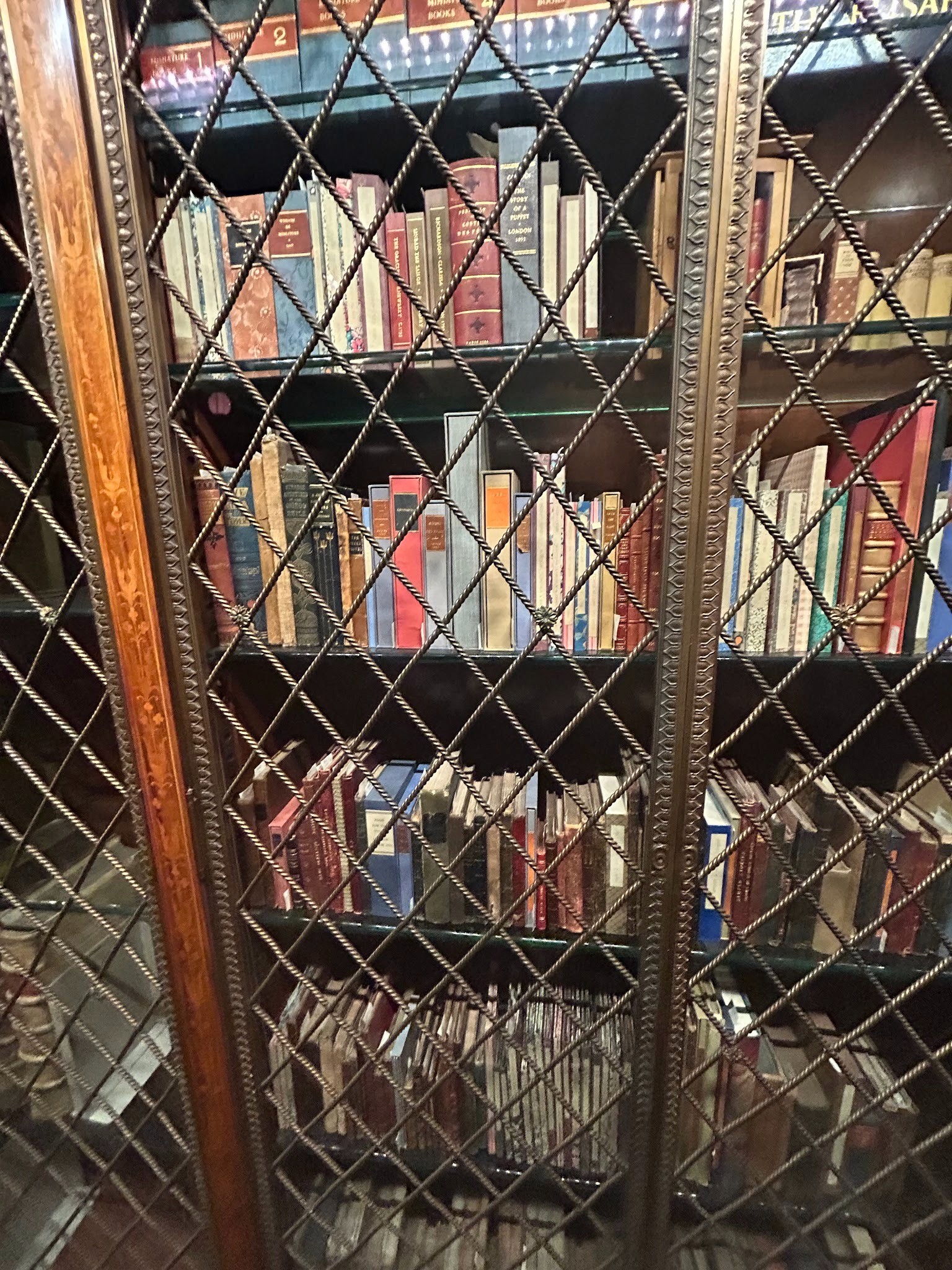
And while slowly reading through the titles on those shelves, I would come across a plaque for Belle da Costa Greene. J.P. Morgan’s private librarian, brought in at just twenty-six years old, she ran the place for over forty-three years, with the first nineteen of those years as his personal librarian and the remaining twenty-four years as the institution’s first director after J.P. Morgan’s death.
It is said that she is the one who built the collection, that she was the one who negotiated with booksellers across Europe, and corresponded with scholars, curators, and heads of state for the majority of the inventory in that library.
The Morgan Library, as it exists today, is largely her creation.
Another lesser-known fact about Belle da Costa Greene is that her father was Richard Theodore Greener, the first Black graduate of Harvard. According to her biography, Belle grew up in a diverse community in Washington, DC, and at some point made the choice to pass as white later in her life, dropping the final letter from her surname and adding “da Costa,” a Portuguese middle name that suggested something Mediterranean and ambiguous.
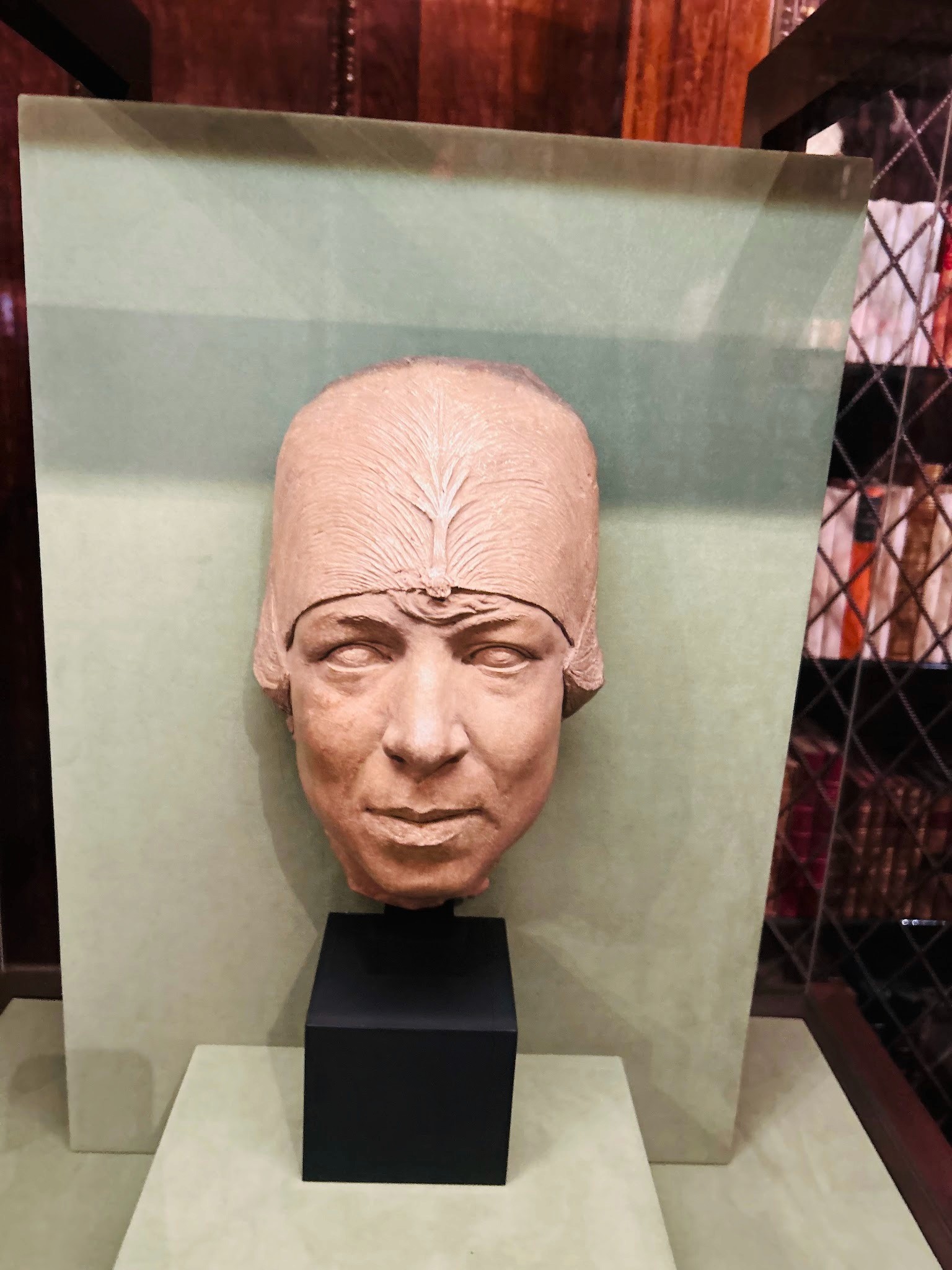
She lived inside that decision for the rest of her life, building one of the greatest collections in America from inside a room that didn’t officially have space for her. The bust of her face, terra cotta, 1925, only recently acquired by the Morgan, now sits quietly in the library she curated. It was discovered in 2018 among an artist’s estate. It is the only known sculpted portrait of her that survives.
I kept thinking about that on the way out, as I purchased books about both J.P. Morgan and Belle da Costa Greene, and
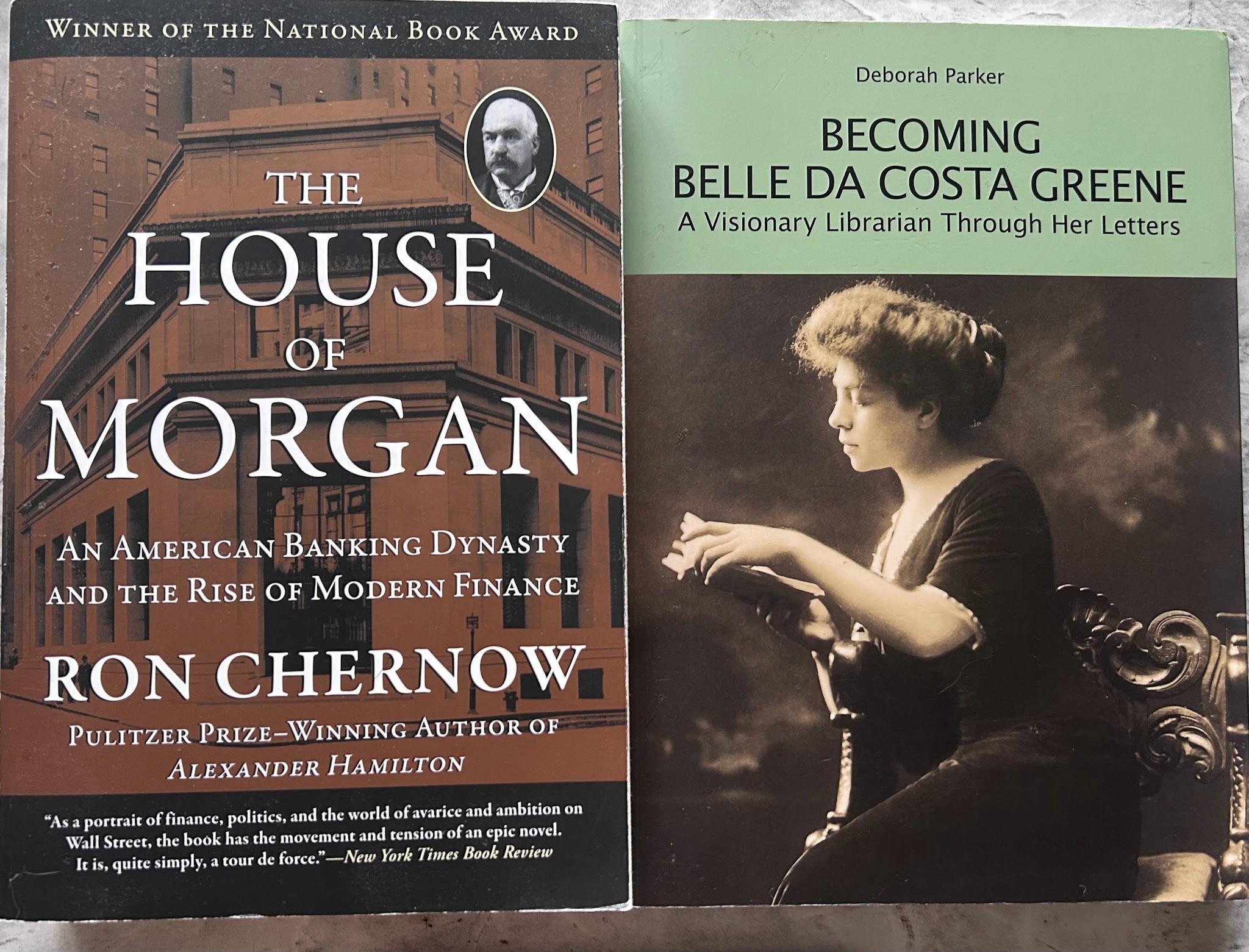
the unsuspecting astrological ceiling and the woman who ran everything for the better part of a century. A woman who has only recently been acknowledged by a bust that has only recently been found and installed. And that despite all the visible things: the wealth, the books, the architecture, those are what most come to see. But I couldn’t help but think about all the invisible things that made them possible.