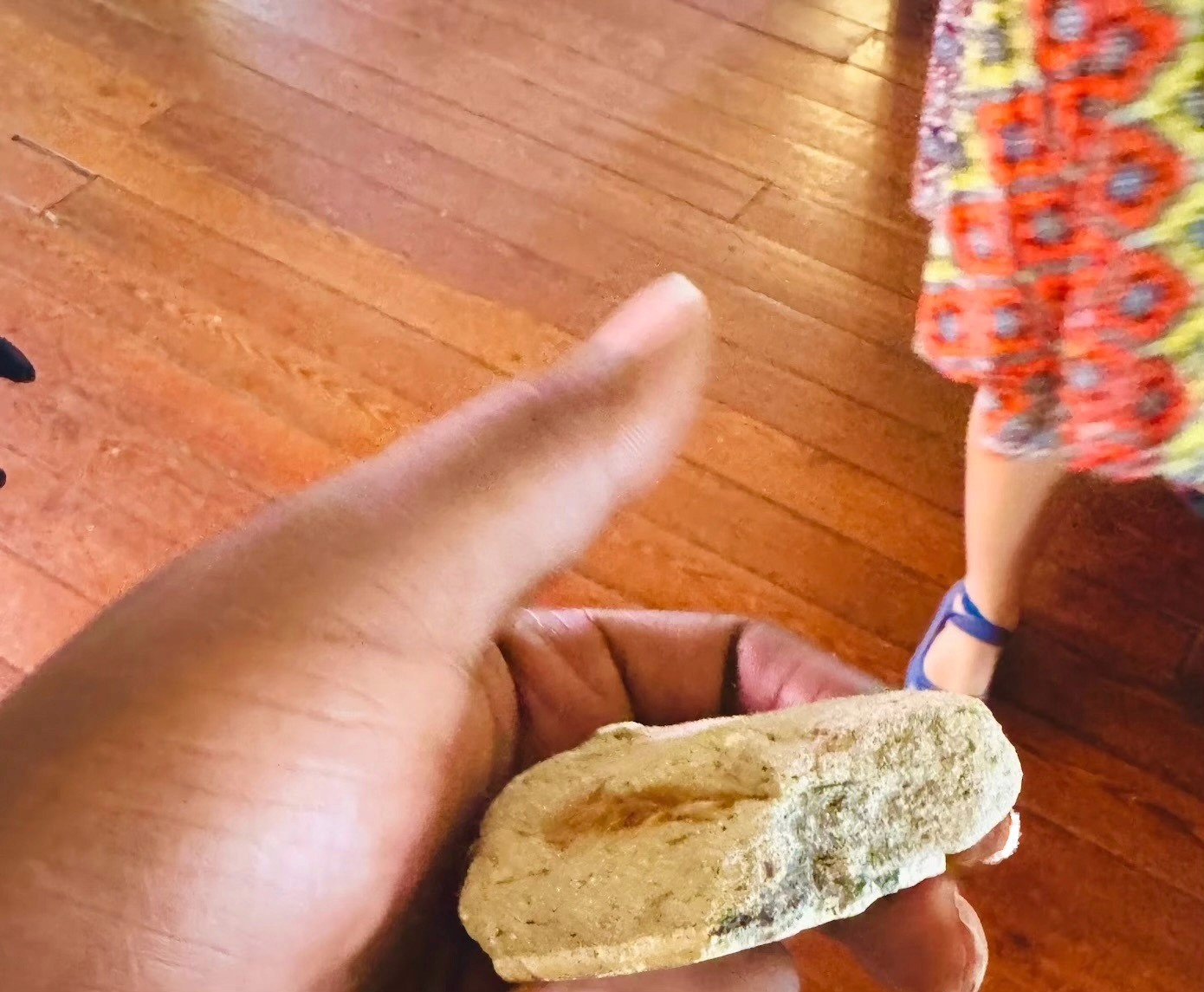
It would all start with a rock: a small, rough-edged stone that, to be honest, was unassuming and without distinction. Yet there it lay in my open palm, placed there by our gracious tour guide, who seemed to sense I did not entirely understand what I was holding.
She would then go on to explain that what I was holding was horse hair and clay. The very same material that was holding the walls of the Beauregard-Keyes House together. That this small, unassuming piece of aggregate, mixed and shaped by hands that history never bothered to name.
I’ve visited New Orleans dozens of times before, and I never tire of its layered histories and the way the city folds centuries into a single block. But it was during a recent spring trip that I had the opportunity to visit the Beauregard-Keyes House on Chartres Street, a National Historic Landmark built in 1826, and now operates as a museum. Despite being unexpectedly closed, our host was gracious enough to arrange a private tour, and I will be forever be grateful for it, because what I learned inside those walls has stayed with me in ways I didn’t expect.
If you’re not familiar with the name, the “BK” refers to two of its most notable residents. General P.G.T. Beauregard, a Confederate general who rented a room in the house for just eighteen months after the Civil War. And Frances Parkinson Keyes, a novelist who purchased the house decades later, restored it to its current splendor, and wrote an audacious and mostly fictional account of Beauregard’s life while living inside his former rooms.
But despite the names on the plaque, dozens of lives have passed through 1113 Chartres Street over two centuries. And this particular essay isn’t about the people whose names survived. It’s about the ones whose names didn’t.
During the tour, our guide explained something that reframed the entire house for me. During the French colonial period, approximately six thousand people were forcibly removed from the West African coast, many from the Senegambia region, and brought to Louisiana. People who weren’t taken at random. No, they were taken, in part, because they were known for their skills as masons.
These were people who had perfected, over centuries, a building technique using horsehair and clay; a method of creating walls so durable that the structures they built are still standing two hundred years later. The horsehair acted as a binding agent, controlling shrinkage and holding the plaster together as it cured. The clay provided the body. Together, they formed an aggregate so hardened that it has outlasted nearly everything else about the people who made it.
This is what I was holding in my hand. Not just a building material, but a piece of carried knowledge. Craft that crossed an ocean in the bodies of people who were given no choice in the crossing.
The rooms of the BK House are pristine: Keyes’s bedroom is preserved down to the quilted coverlet on the bed. Beauregard’s portrait hangs above the mantle in a heavy gold frame, and there is even a handwritten manuscript protected behind glass. In another room, a framed newspaper documents a murder that took place in the house when a Sicilian family, the Giaconas, confronted members of the Black Hand extortion network on the back porch. Even violence has been archived here.
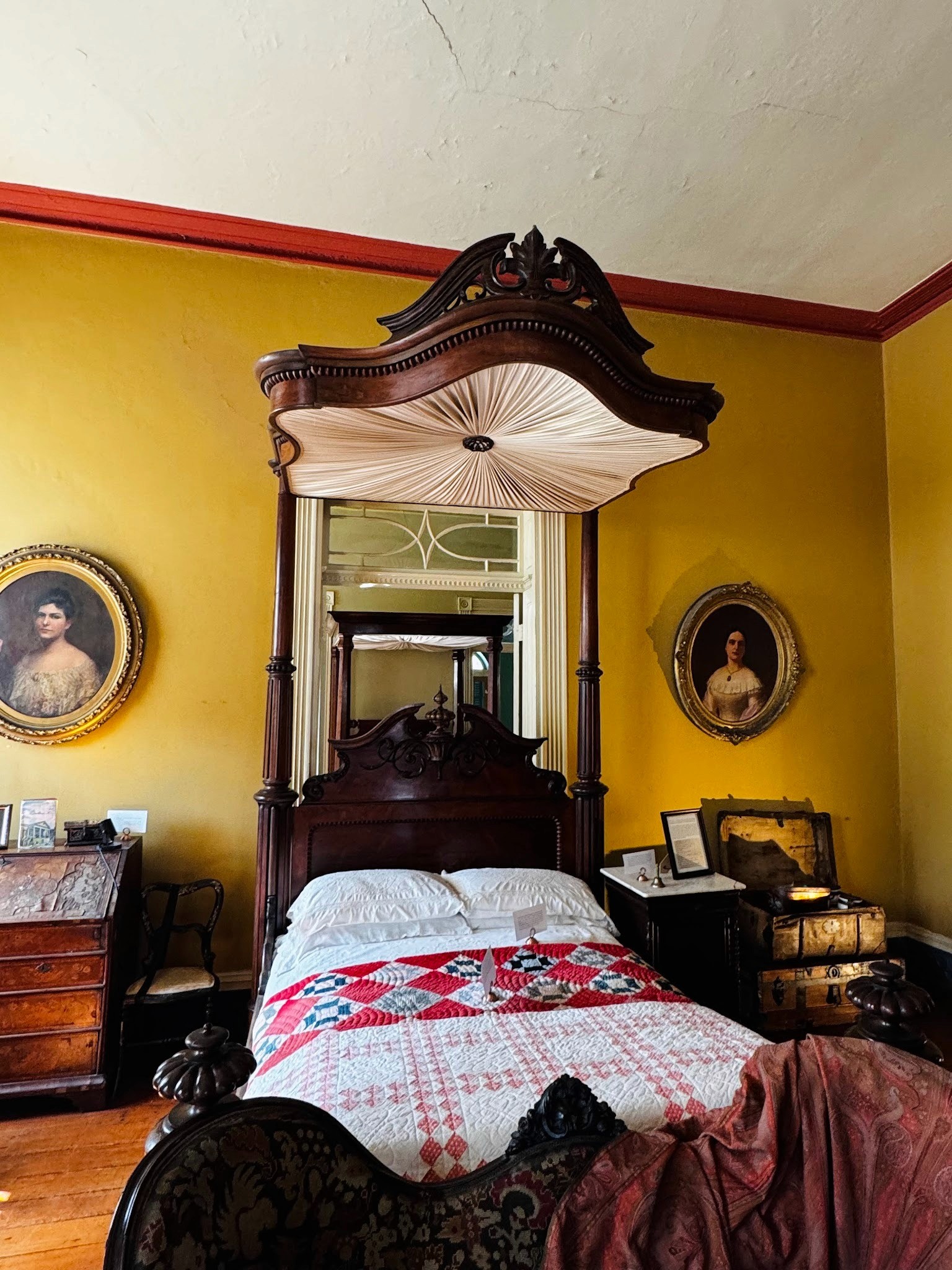
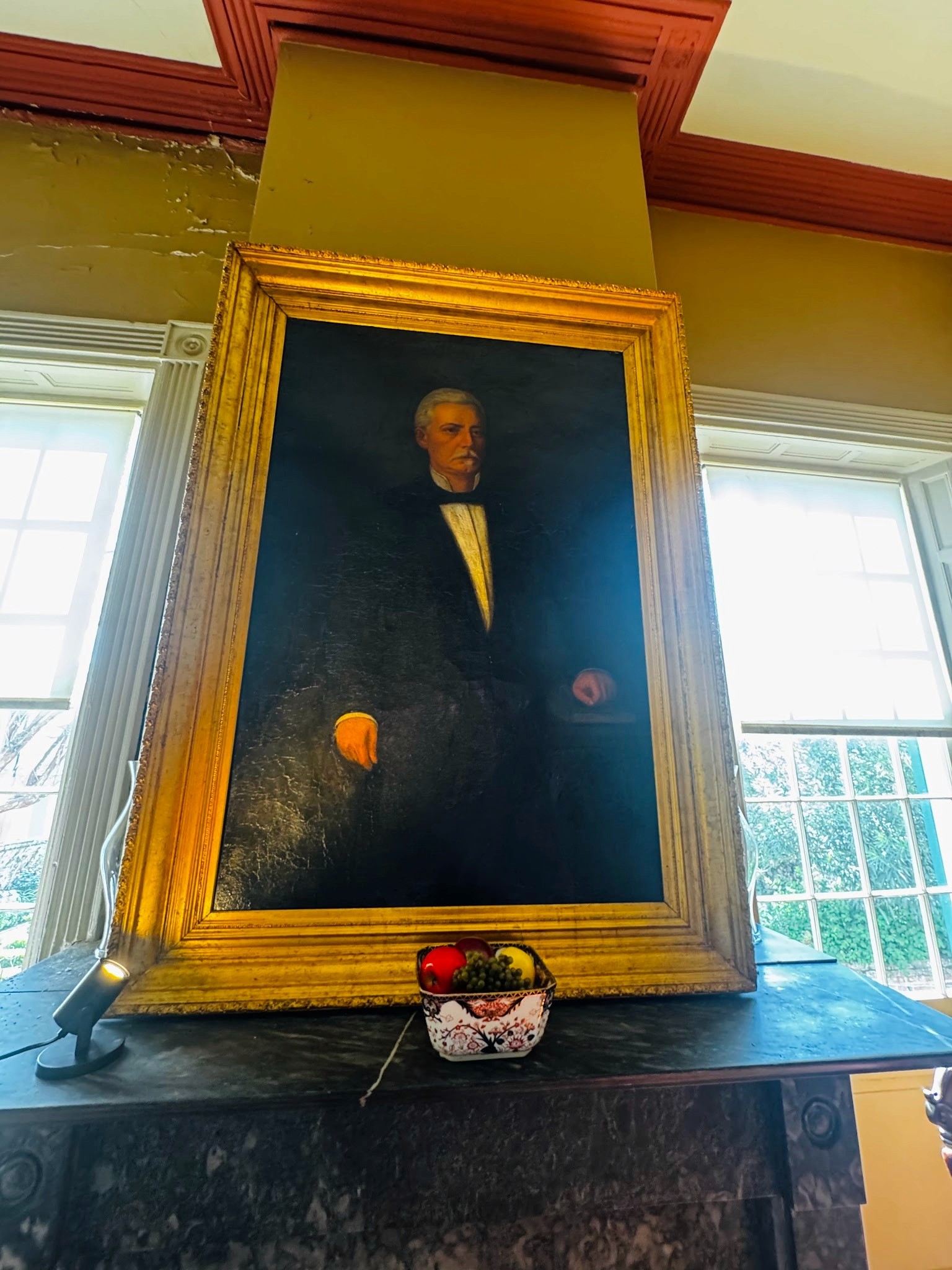
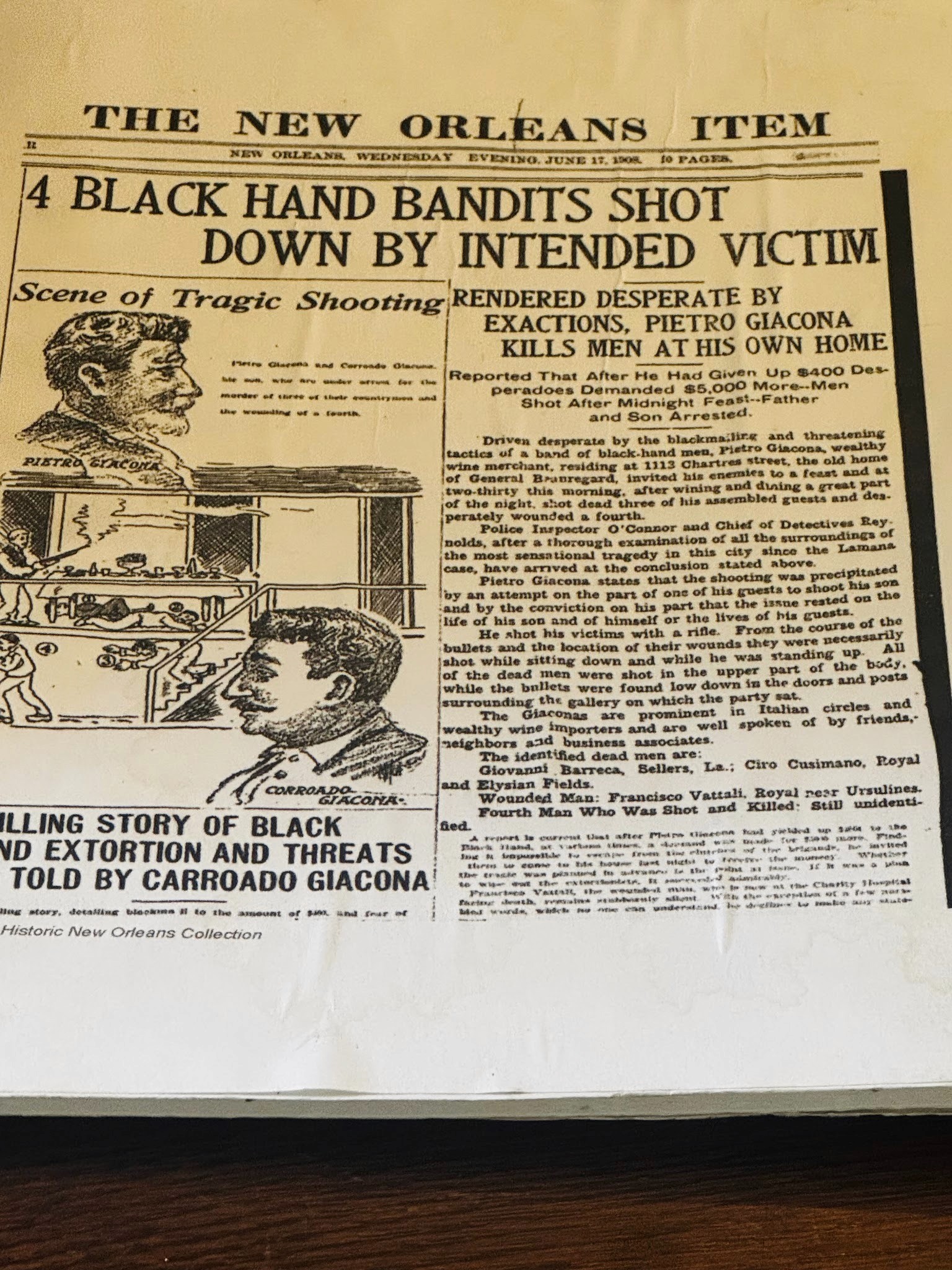
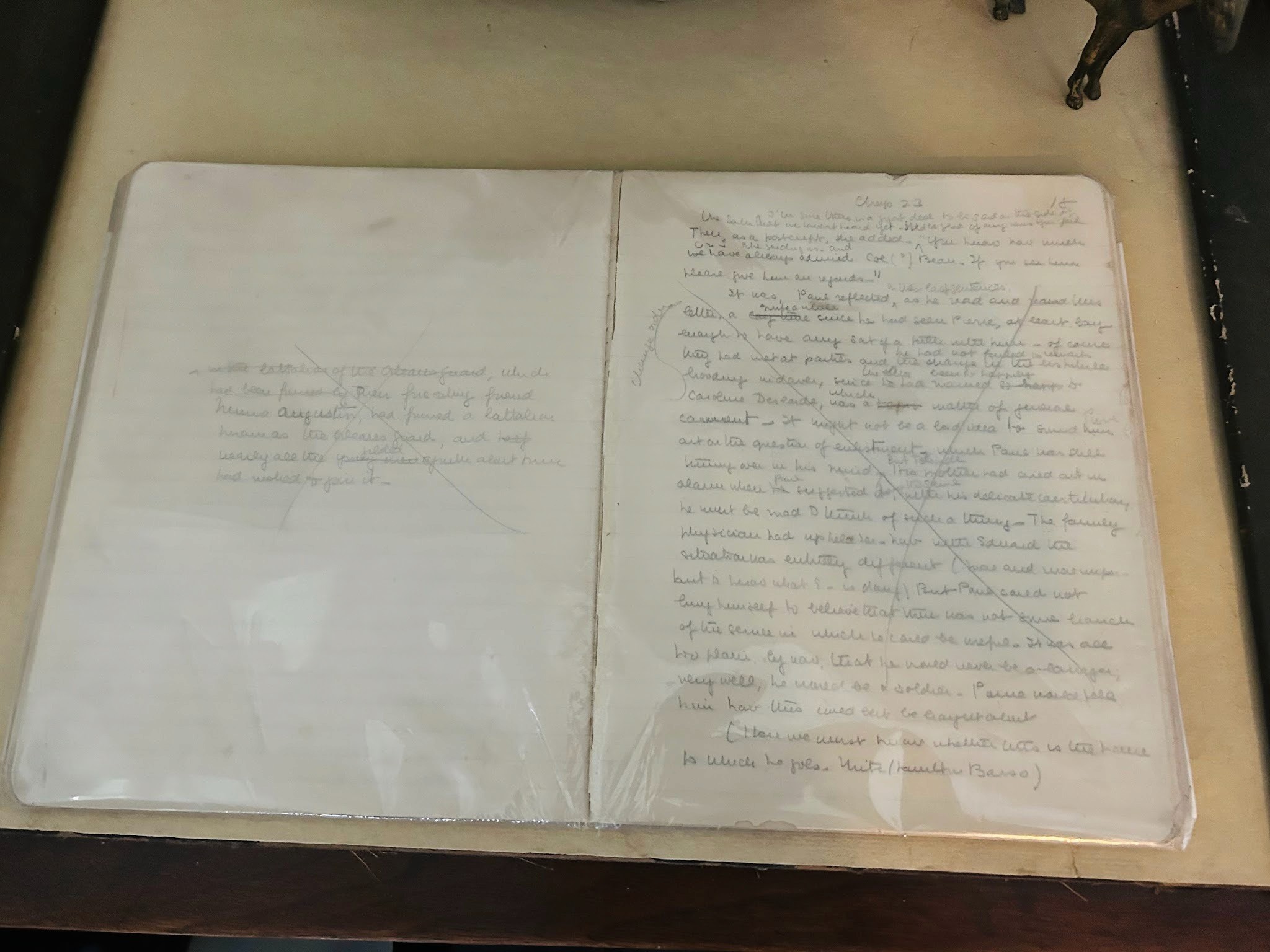
But walk through these rooms, and you’ll find no plaque identifying the Senegambian masons who built the walls you’re touching. The house remembers everything, except the people who built it (which I know isn’t all that unusual).
However, what unsettled me the most wasn’t the erasure, but what I’d learned next.
Our guide would end up telling us a story about a man who currently maintains the house, a man who works with the same horsehair and clay techniques that the original builders used. According to the guide, he’s a direct descendant of those Senegambian masons and possesses the craft that has been passed down through generations, and requires roughly twenty years of apprenticeship to master.
A skill so rare that he is regularly flown out to France to repair Versailles. Not because France lacks craftsmen, but because almost no one left on the planet knows how to work with these materials.
And then the guide said something that I haven’t been able to shake:
That he was currently down to one apprentice. Originally, he had two: a grandson and another man, if I remember correctly, but the man had suddenly passed away, leaving the aging mason with only one apprentice. And I could suddenly feel the weight of uncertainty while standing in that room, doing the arithmetic of it all. How, within a single generation, a skill that survived the Middle Passage could simply vanish. Not because it was taken this time, but because there was no one left to carry it.
This is something I’ve often come to think about.
That as a whole, we are meticulous about preserving objects: The bed, the portrait, the manuscript, the newspaper clipping, framed or put behind glass. And while yes, all of that matters. There is a difference between preserving a house and preserving the knowledge that holds it together. One is an act of curation. The other, an act of transmission. And we are far better at the first than we are at the second.
The Beauregard-Keyes House stands at 1113 Chartres Street, immaculate and open for tours, and for the most part tells a history through the names of a general and a novelist, through murder and restoration, through architecture and art.
But the truest history of that house lives in the material itself, in the horsehair and clay pressed into the walls by hands we never recorded. And the man who still knows how to repair them is running out of time to teach someone else.
That is the missing link between the foundation and the present. Not a gap in the archive. A gap in what we chose to remember.
I never got the man’s name. And I think that says almost everything.